
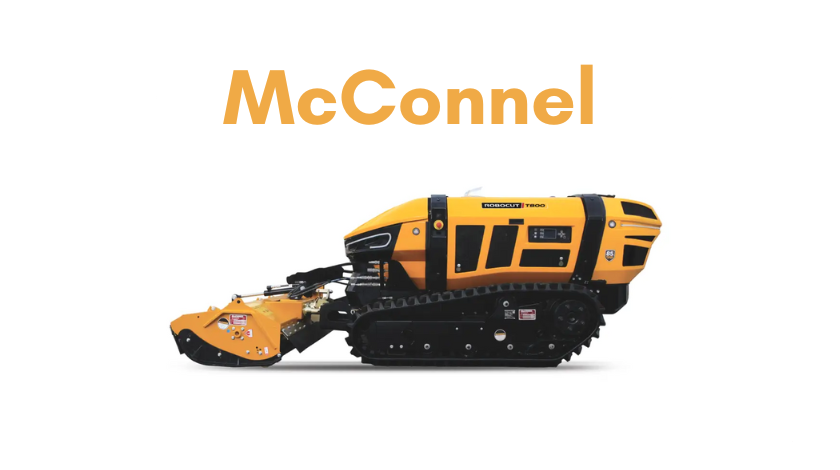
Let’s be honest, when you think about big names in farming, your mind probably goes to the tractors—the John Deeres, the Massey Fergusons, the big red and green machines that roll across the landscape. But any seasoned farmer will tell you the real magic often happens behind the tractor, hooked to the three-point linkage. That’s where the unsung heroes of efficiency live, and for generations, one of the most respected names in that space has been McConnel.
I remember the first time I really noticed a McConnel power harrow at work. It wasn’t on a glossy brochure; it was on my neighbor’s farm. I was used to the rhythmic, chunk-clunk of old-fashioned tillage tools, but this thing was different. It was a whirlwind of controlled aggression, turning rough stubble into a beautiful, fine tilth in what seemed like one pass. The soil behind it looked ready for planting right then and there. It sparked my curiosity. Was this just another piece of iron, or was there a real reason for its reputation?
From Irish Ingenuity to Global Fields
McConnel’s story isn’t one of faceless corporations. It started back in 1932 in Ireland, born from practical need. The founder, John McConnel, was an engineer who saw farmers struggling. His early innovations in hedge cutters literally changed the shape of farming in regions overgrown with brush. That problem-solving DNA never left the company. They didn’t just make tools; they made solutions for specific, backbreaking jobs. Over the decades, that focus expanded from hedge cutters to power harrows and a whole suite of cultivation equipment. Today, under the umbrella of the Kongskilde Group, McConnel benefits from global engineering resources while keeping that core identity: building tough, intelligent implements for professional farmers and contractors.
The Power Harrow: McConnel’s Claim to Fame
If McConnel has a flagship product, it’s the power harrow. But what exactly is it, and why do so many farmers speak about it with a kind of reverent respect?
In simple terms, a power harrow is a tillage implement that uses gear-driven tines (those L-shaped or straight metal forks) to aggressively mix and break up soil. Unlike a traditional harrow that just scratches the surface, a power harrow’s tines are actively driven by the tractor’s PTO (Power Take-Off shaft). This means it’s not just dragging; it’s actively chopping, milling, and blending the soil.
Here’s where McConnel’s engineering shines. Their classic design often features a “closed casing” that houses the gearbox and rotor. This isn’t just for looks. That casing contains the soil and residue, forcing it to stay within the path of the tines for longer. The result is a more consistent, fine, and level seedbed. It crushes clods, incorporates organic matter or fertilizer evenly, and leaves minimal air pockets. For crops that need a perfect start—like vegetables, salad greens, or finely seeded grasses—this is a game-changer.
The benefit you feel immediately is efficiency. You can often replace multiple passes (plowing, discing, dragging) with one or two passes of the power harrow. That saves time, fuel, and, crucially, reduces soil compaction from driving over the field so many times. The soil structure it creates is ideal for moisture retention and good root development. From my conversations with farmers who use them, the common thread is reliability and consistency. “I know exactly what kind of seedbed I’m going to get,” one told me, “regardless of how rough the field was when I started.”
The Hedge Cutter: The Original Problem-Solver
Before they were tilthing soil, McConnel was taming wilderness. Their hedge cutters are legendary, particularly in the UK and Ireland where hedgerows define the landscape. A McConnel hedge cutter is a different beast from a simple rotary cutter or flail mower. These are heavy-duty, articulated-arm machines that can reach out, up, and over to sculpt overgrown hedges, clear ditch banks, and manage roadside vegetation.
The key here is reach and power. The hydraulic arm allows the cutting head to be positioned with precision, meaning the tractor can stay safely on the road or firm ground while the cutter works on slopes or awkward angles. The cutting heads themselves are built to handle thick, woody material without flinching. For a farmer managing miles of boundary hedges or a contractor working for local councils, this isn’t a luxury; it’s the only tool for the job. It speaks to McConnel’s origin story: building something extraordinarily tough for an extraordinarily tough job.
The Supporting Cast: Bedformers, Spreaders, and More
While power harrows and hedge cutters are the headliners, McConnel’s lineup is broader. Their bedformers are precision tools for creating raised beds, essential for certain vegetable and strawberry operations. Their fertiliser spreaders are known for their accurate and even distribution, which is critical both for crop health and environmental responsibility. What ties them all together is a sense of purpose-built design. These aren’t generic, rebadged implements. They have features that suggest the designers actually talked to people who use them for ten hours a day.
So, Is McConnel Right for Your Farm? The Honest Assessment
This is the million-dollar question. Let’s break down the pros and cons as I see them.
On the pro side, you’re getting proven durability. These machines are built with heavy-duty gearboxes and frames meant to last decades with proper care. There’s a tangible feel of quality. The performance, especially of the power harrows, is top-tier, creating a seedbed quality that’s hard to match with other systems. There’s also the benefit of a long history and a strong dealer network in many regions, which means support and knowledge are available.
But we have to be fair about the cons. That quality and performance come at a price. McConnel equipment often carries a higher upfront cost compared to some competitors. It’s an investment. Secondly, the closed-casing design of their power harrows, while great for performance, can be more susceptible to wrapping up in certain wet, sticky conditions or with certain residue types. They also demand respect when it comes to maintenance. Keeping those gearboxes topped up with the right oil and greasing the myriad of bearings is not a suggestion; it’s a requirement for longevity. I’ve seen a neglected McConnel harrow, and its repair bill was a painful lesson in false economy.
My Advice on Maintenance and Longevity
Treat a McConnel like a partner, not a slave. That sounds cheesy, but it’s true. The manual is your friend. Grease it every single day you use it, without fail. Check the gearbox oil levels religiously. At the end of the season, give it a proper clean, look for worn tines or seals, and address them in the off-season. Store it under cover. These simple acts of care are what separate a machine that lasts 15 years from one that’s struggling after five. And when you need parts, go through a proper dealer. It might be slightly more expensive than the cheapest online option, but you’ll get the right part, and the advice that comes with it is often priceless.
Conclusion
In a world of flashy gadgets and quick fixes, McConnel represents something enduring: mechanical engineering focused on a specific agricultural task, done exceedingly well. Choosing McConnel isn’t about buying the cheapest option; it’s about investing in a tool that will become a core, reliable part of your operation for years to come. It’s for the farmer who values soil structure, who needs dependable brush management, and who understands that the right implement behind the tractor is just as important as the tractor itself. If you’re that person, and your budget allows for the investment, a McConnel machine won’t just be a purchase—it will be a decision you’re unlikely to regret.
Frequently Asked Questions (FAQ)
Q: Where are McConnel machines manufactured?
A: McConnel is part of the Kongskilde Group, and manufacturing is primarily in Europe, with key facilities in the UK and other locations. The company maintains strict quality control standards across its production sites.
Q: Can I use a McConnel power harrow on very rocky soil?
A: While built tough, excessively rocky ground is a challenge for any power harrow. The impact can damage tines and put immense stress on the gearbox. A thorough stone-picking or using a stone burier first is highly recommended in rocky conditions.
Q: Are used McConnel machines a good buy?
A: They can be an excellent value, given their longevity. However, inspection is key. Prioritize service history. Check for gearbox oil leaks, listen for unusual noises when the rotor is turned by hand, and inspect the frame for cracks. A well-maintained used McConnel is often a smarter buy than a cheap new alternative.
Q: What tractor horsepower do I need for a McConnel power harrow?
A: It varies greatly by model and working width. Smaller models may require 80-100 HP, while larger, intensive models can need 180 HP or more. Always consult the official specifications for the specific model you’re considering and match it to your tractor’s available PTO horsepower.
Q: Do McConnel hedge cutters work for forestry or clearing large trees?
A: No. McConnel hedge cutters are designed for hedgerow management, brush, and vegetation up to a certain thickness (usually a few inches). For proper forestry work involving trees, you would need a dedicated forestry mulcher or excavator-mounted cutter.