
Have you ever heard of a place that was its own world? A chain of islands where kings ruled, unique languages flourished, and a culture blended influences from across the seas into something entirely its own. This isn’t a fantasy. This is the real story of the Ryukyuans, the indigenous people of the islands we now call Okinawa.
Most people know Okinawa for its beautiful beaches, its tragic World War II history, or maybe its delicious food. But behind these things lies a much deeper, older story. It’s the story of a people with a distinct identity that stretches back over a thousand years. I remember my first time visiting Okinawa; I was struck by how different it felt from mainland Japan. The atmosphere, the cadence of the local speech, the architecture of the old castles—it whispered of a separate history. That feeling led me down a rabbit hole of discovery about the Ryukyuans, and what I learned was breathtaking.
So, let’s set aside what we think we know. For a moment, forget the map that shows Okinawa as just a southern part of Japan. Instead, imagine a thriving, independent kingdom in the middle of the East China Sea. This is where our story begins.
The Lost Kingdom: The Glorious and Independent History of the Ryukyuans
Long before these islands became a Japanese prefecture, they were the heart of the Ryukyu Kingdom. This wasn’t a small, isolated tribe. From around the 15th to the 19th century, the Ryukyu Kingdom was a significant maritime trading nation. Think of it as the “Kingdom of the Sea,” a hub that connected giants. Its ships sailed between China, Japan, Korea, and Southeast Asia, dealing in spices, silk, pottery, and even swords.
The kingdom’s capital was at Shuri, in present-day Naha, Okinawa. Shuri Castle, now a reconstruction after its destruction in war, was a magnificent symbol of this era. Its architecture wasn’t purely Japanese or Chinese; it was distinctly Ryukyuan, incorporating red tile roofs and dragon motifs in a way that spoke of its unique position. The kings of Ryukyu were smart diplomats. They paid tribute to the Chinese Emperor, which granted them lucrative trading rights, but they also maintained strong ties with Japan. This delicate balancing act allowed them to prosper for centuries.
This golden age, however, was not to last forever. In 1609, the powerful Japanese Satsuma clan from southern Kyushu invaded. The Ryukyu Kingdom was defeated. While it was allowed to keep a shadow of its independence—largely to maintain that valuable trade link with China for Satsuma’s benefit—its sovereignty was severely compromised. The final blow came in 1879, in an era Japan calls the Meiji Restoration. The new Japanese government, centralizing its power, formally annexed the islands. They abolished the Ryukyu Kingdom and declared the establishment of Okinawa Prefecture. The last king, Sho Tai, was taken to Tokyo. Just like that, an independent nation ceased to exist on the world stage.
This history is crucial to understanding Ryukyuans today. It explains why their identity is complex. They are not simply “Japanese from the south.” They are a people with a memory of statehood, of running their own affairs and engaging with the world as a distinct nation. This historical consciousness is a quiet undercurrent in modern Okinawan society.
A Tapestry of Voices: The Beautiful, Endangered Ryukyuan Languages
If history is the skeleton of identity, language is its beating heart. And here lies one of the most poignant parts of the Ryukyuan story. The Ryukyuans did not historically speak Japanese. They spoke—and some still do—their own family of languages: the Ryukyuan languages.
Let me be clear: these are not mere “dialects” of Japanese, as they are often mistakenly called. Linguistic experts agree that Ryukyuan languages and Japanese split from a common ancestor over a thousand years ago. To put it simply, they are as different from Japanese as Italian is from French. A person from Tokyo would not understand someone speaking the Okinawan language (called Uchinaaguchi) any more than an English speaker would understand Dutch without study.
There are several Ryukyuan languages, like Miyako, Yaeyama, and Amami, each with its own variations. They have unique sounds, grammar, and poetry. When I listened to an elder sing a traditional kachashi folk song in deep Uchinaaguchi, the emotion was palpable, even though I didn’t understand the words. It felt ancient and powerful.
Tragically, these languages are now critically endangered. After annexation, Japan enforced a strict policy of assimilation. The famous “Dialect Cards” (hogen fuda) were used in schools. Children caught speaking their native Ryukyuan language were punished and humiliated, forced to wear a card around their neck branding their “mistake.” Generations were taught that their mother tongue was backward and shameful, something to be hidden to succeed in Japanese society.
The result is that most native speakers today are elderly. UNESCO classifies all Ryukyuan languages as endangered. But there is hope. A vibrant revival movement is underway. Young people are taking classes, musicians are weaving the language into their songs, and communities are working to document and teach it. They are fighting not just to preserve words, but to reclaim a vital piece of their Ryukyuan soul.
Spirit in Sound and Movement: Ryukyuan Music, Dance, and Spiritual Beliefs
Even if the languages are under threat, Ryukyuan culture expresses itself explosively through art and spirituality. This is where you can feel the culture’s pulse most strongly.
At the center of Ryukyuan music is the sanshin. It’s a three-stringed instrument, ancestor to the Japanese shamisen, with a body often covered in python skin. Its sound is twangy, soulful, and immediately recognizable. You haven’t experienced Okinawa until you’ve heard the plaintive, beautiful notes of a sanshin accompanying a heartfelt song. It’s the soundtrack of the islands.
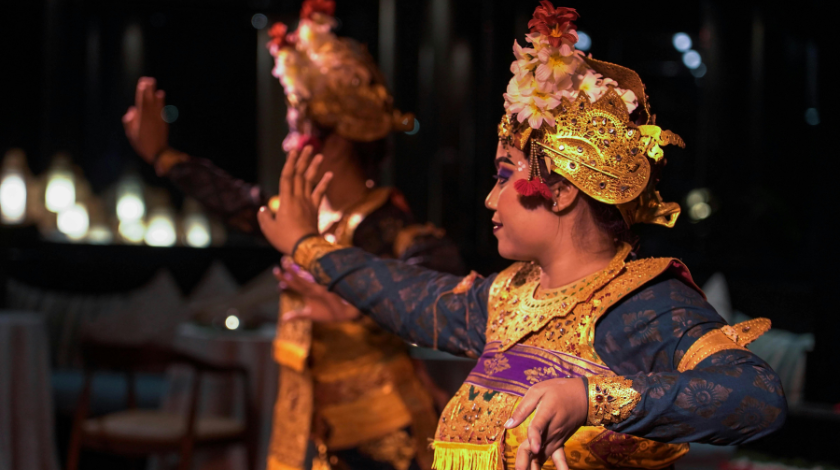
Then there is the dance. Ryukyuan dance (Ryukyu buyo) is elegant and flowing, often telling stories of the sea, harvest, or court life from the kingdom era. In contrast, Eisa dance is a dynamic, drum-powered performance traditionally performed during the Obon festival to honor ancestors. Young people pound on large taiko drums, leap, and chant, creating an energy that vibrates through the entire street. I witnessed an Eisa festival once, and the sheer power and communal joy were unforgettable. It wasn’t a show for tourists; it was the community’s spirit made visible.
Underpinning these arts is a traditional Ryukyuan spiritual worldview. It’s a blend of animism (the belief that spirits reside in natural objects like trees, rocks, and springs) and deep ancestor veneration. Sacred spaces called utaki are found throughout the islands—often quiet, forested groves where one can feel a profound sense of peace. The spiritual leader, the noro or yuta (priestess), traditionally held significant social importance, guiding rituals and communicating with the spiritual world. This matriarchal spiritual element stands in interesting contrast to the historical patriarchal kingdoms.
Living as Uchinanchu Today: Preservation, Identity, and Modern Challenges
So, what does it mean to be Ryukyuan—or Uchinanchu, as many proudly call themselves—in the 21st century? Identity is never a simple thing, and for Ryukyuans, it exists on a spectrum.
For some, especially the older generation or active cultural practitioners, their Ryukyuan identity is primary. They speak the language, practice the traditions, and keenly feel the history. For others, especially younger people born and raised in a fully Japanized system, identity is more hybrid. They might feel both fully Japanese and distinctly Okinawan, drawing on Ryukyuan heritage as a source of pride and local flavor.
Modern challenges are complex. There’s the ongoing struggle for cultural preservation against the tide of mainstream Japanese and global pop culture. There’s the painful and politically charged issue of the large US military bases concentrated in Okinawa, a legacy of WWII and the Cold War that many locals feel treats their homeland as a strategic sacrifice zone.
Yet, there is a powerful movement of cultural revitalization. Local radio stations play songs in Uchinaaguchi. Restaurants champion traditional Ryukyuan cuisine, which is a fascinating world of its own featuring pork, bitter melon (goya), and purple sweet potato. Festivals like the Shuri Castle Festival actively recreate ceremonies from the Ryukyu Kingdom era. And globally, a strong Uchinanchu diaspora network connects people from Hawaii to South America back to their roots in the islands.
Being Ryukyuan today, in my observation, is about carrying that distinct history and culture forward with confidence. It’s about knowing that your story didn’t start in 1879 or 1945. It’s about embracing a heritage that made these islands a cosmopolitan crossroads of the sea, and finding ways to let that unique light shine in the modern world.
Conclusion
The story of the Ryukyuans is a powerful reminder that the map is not the territory. The lines drawn by nations can sometimes obscure much older, richer stories lying beneath. The Ryukyuans are not a relic of the past. They are a living, evolving people with a resilient culture. From the ruins of Shuri Castle to the booming drums of Eisa, from the whispered words of an endangered language to the vibrant communities across the globe, the Ryukyuan spirit endures. To understand Okinawa truly, you must first meet the Ryukyuans—the people of the sea, the children of a lost kingdom, who continue to chart their own course in the waves of history.
Frequently Asked Questions (FAQ)
Q1: Are Ryukyuans and Okinawans the same thing?
Yes, broadly speaking. “Ryukyuan” is the broader ethnic and historical term for the indigenous people of the entire Ryukyu Island chain. “Okinawan” more specifically refers to the people of the main Okinawa Island group. In modern casual use, they are often used interchangeably, especially in English.
Q2: Is the Ryukyuan language still spoken?
Yes, but it is endangered. The native speakers are primarily from the older generations. However, there are dedicated revival movements with university courses, community classes, and media initiatives working to teach and promote the language among younger people.
Q3: What happened to the Ryukyu Kingdom?
The independent Ryukyu Kingdom was formally annexed by the Japanese Empire in 1879 during the Meiji Restoration and was renamed Okinawa Prefecture. This followed centuries of increasing influence and a prior invasion by the Japanese Satsuma clan in 1609.
Q4: What is the main religion of the Ryukyuans?
There is no single, organized state religion. Traditional Ryukyuan spirituality is a unique blend of native animist beliefs (worship of natural spirits and sacred places called utaki) and deep ancestor veneration. These coexist today with Buddhism and various other religions introduced later.
Q5: What does “Uchinanchu” mean?
Uchinanchu (ウチナンチュ) is the Okinawan/Ryukyuan word for “person of Okinawa.” It’s a term of identity and pride used by the people themselves, especially within the diaspora community, to express their cultural belonging.