
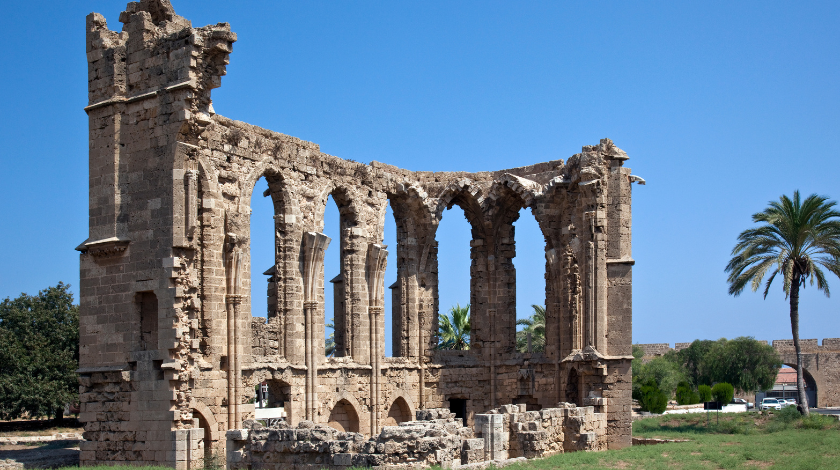
Famagusta is a city that doesn’t just tell you its story; it makes you feel it in your bones. The first time I walked up to its immense, honey-colored Venetian walls, I wasn’t just looking at a tourist attraction. I was facing a fortress of history, layer upon layer of triumph and tragedy. Sunlight glinted off the calm Mediterranean, but the air itself felt heavy with memory. This isn’t just another pretty Mediterranean old town. Famagusta, especially its abandoned district of Varosha, is one of the most powerful and poignant places I’ve ever visited. It’s a living lesson in history, a beautiful scar, and a testament to resilience, all rolled into one.
Let’s unpack this complex, fascinating city together. I’ll share what I’ve learned from visiting and speaking with people who know it far better than any guidebook ever could.
Part 1: Echoes of Empires – The Ancient and Medieval Soul
To understand modern Famagusta, you have to start centuries before its modern troubles. Just a short drive north of the city lie the sprawling ruins of Ancient Salamis. Walking among the toppled columns of the gymnasium, with the sea breeze whispering through the marble, you get a sense of sheer scale. This was once a mighty city-kingdom, founded, according to legend, by a Trojan War hero. The incredibly detailed floor mosaics, sheltered in the onsite museum, show a level of sophistication and wealth that’s breathtaking. Salamis reminds you that this coastline has always been a prize, coveted by empires.
Back in the main city, the Venetian Walls are Famagusta’s crown. They form a near-perfect circle, so massive and intact you can spend hours walking their length. Standing on the Martinengo Bastion, one of the finest examples of military architecture in the Mediterranean, you can see why the Venetians poured so much effort into them. The Ottoman threat was real and looming. The walls tell a story of fear and preparation. But within them lies another gem: Othello’s Tower. Yes, that Othello. While Shakespeare’s play is fiction, it was inspired by this very citadel. Climbing its ramparts, looking out from the ramparts where the fictional Moorish captain might have stood, is a wonderful blur of literature and reality. It’s a place that sparks the imagination.
Then there’s the building that stops every visitor in their tracks: the Lala Mustafa Pasha Mosque. But look closer, and you’ll see the structure is pure Gothic cathedral. This was originally St. Nicholas Cathedral, the crowning place of Crusader kings. Its intricate stone façade is stunning. In 1571, after a brutal siege, the Ottomans converted it into a mosque, adding a minaret to the side. Seeing this architectural masterpiece, a blend of two worlds and two faiths, is the perfect metaphor for Cyprus itself – a place of layered identity. Inside, the feeling is serene, with carpets on the floor and the elegant Gothic arches soaring above, devoid of the statues you’d expect in a cathedral. It’s not a contradiction; it’s a continuity. The local community, regardless of background, often speaks of this building with a sense of shared, if complicated, heritage.
Part 2: The Frozen Postcard – The Story of Varosha
Now we come to the chapter that defines modern Famagusta in the global imagination. Just south of the majestic old walls, visible from several bastions, is a sight that chills the soul: Varosha.
Before 1974, Varosha wasn’t a historical site. It was the future. It was the glamorous, modern resort suburb of Famagusta, a gleaming strip of luxury hotels, high-rise apartments, and vibrant nightclubs. Celebrities like Elizabeth Taylor and Brigitte Bardot vacationed here. Its golden sand beach, Palm Beach, was considered one of the finest in the world. Postcards from the early 70s show a bustling, chic, cosmopolitan playground.
All that ended in the summer of 1974. Following a coup in Greece aimed at uniting Cyprus with Greece, Turkey intervened militarily, citing its role as a guarantor power to protect the Turkish Cypriot community. The fighting was fierce and fast. As the Turkish army advanced on Famagusta, the entire Greek Cypriot population of Varosha fled south, believing they would return in a matter of weeks. They took only what they could carry. The Turkish army fenced off the district, and for decades, it was sealed to the public, guarded by the military.
What was left behind is a time capsule of the 1970s, slowly being reclaimed by nature. From the observation points now open to the public, you can see the skeletons of those luxury hotels. Their windows are blown out, their balconies crumbling. Trees grow through the asphalt of abandoned streets. Road signs still point to John F. Kennedy Avenue. It is profoundly silent. The first time I saw it, I wasn’t just looking at buildings; I was looking at 40,000 interrupted lives, at a bustling future that never arrived. The weight of those lost homes and dreams is almost physical. It’s crucial to understand that Varosha is not just a “cool ghost town.” It is a deeply sensitive, politically charged symbol of the island’s division, and the core of one of the thorniest issues in peace talks – the right of return for refugees.
Part 3: The Beating Heart – Life Inside the Walls Today
This is the part many visitors miss, and it’s the most important. Famagusta is not a museum. It is a living, breathing, and wonderfully vibrant city, especially within the walls.
The political status is complex. Famagusta is located in the area administered by the Turkish Republic of Northern Cyprus (TRNC), a state recognized only by Turkey. You will need to cross the United Nations-controlled Green Line, either from the southern Republic of Cyprus via the Ayios Nikolaos crossing, or fly directly into Ercan Airport. This reality is part of the visit, and it’s wise to be informed and respectful.
Once inside the walled city, you’ll find a delightful maze of narrow streets. The energy is youthful, thanks to the large Eastern Mediterranean University (EMU). Students fill the cafes that spill onto squares, creating a lively, hopeful atmosphere. You can sit at a traditional café, sip strong Turkish coffee, and watch life go by. Shopkeepers are friendly, often eager to chat about their city beyond the headlines.
The local food is a highlight. Don’t leave without trying meze – a feast of small dishes featuring grilled halloumi cheese, savory kleftiko (slow-cooked lamb), fresh seafood, and an array of dips. I remember a meal at a family-run place near the old church of St. George of the Greeks, where the owner brought out dish after dish, explaining each one with pride. It was a reminder that shared tables and shared food are a universal language of welcome.
Part 4: A Visitor’s Guide – With Sensitivity and Curiosity
If you’re planning a visit, here is my advice, formed from my own experience.
How to Get There: Most international visitors fly into Larnaca in the south. You can rent a car and drive to the crossing point at Dherynia/Ayios Nikolaos. The process is straightforward; you’ll need your passport and to purchase temporary car insurance for the north. Alternatively, you can join a guided tour from the south, which handles all the logistics.
What to See & Do:
-
Walk the Venetian Walls (a must for perspective).
-
Explore the Walled City: Get lost in the streets, visit the mosques and churches, find the hidden Namık Kemal Dungeon.
-
See Varosha from the Designated Viewing Points: Approach it with respect and contemplation, not just a camera lens.
-
Visit Ancient Salamis: Allocate a good half-day for this.
-
Relax at Palm Beach: Enjoy the beautiful sand and clear water, right next to the fence of Varosha – a surreal but beautiful contrast.
-
Talk to People: Engage with students, shop owners, and guides. Their personal stories are invaluable.
A Note on Ethics: Remember that Varosha represents a painful, unresolved issue for thousands of people. Be mindful of your photos and comments. This isn’t an attraction in the traditional sense; it’s a memorial to a stalled peace process. Supporting local businesses in the walled city is a positive way to contribute to the community that calls present-day Famagusta home.
Conclusion
Famagusta stays with you. It’s not a place you simply tick off a list. It’s a city that forces you to think about history, about conflict, and about the incredible resilience of human communities. You carry away the beauty of Salamis, the grandeur of the walls, the eerie silence of Varosha, and the lively chatter of a student café. It is a place of profound contrast, where the past is not just remembered but is a visible, tangible part of the present landscape.
My hope, like that of many Cypriots from all communities I met, is for a future where the entire city can be reunited, healed, and whole. Until that day, Famagusta stands as a powerful, beautiful, and heartbreaking reminder of what is lost when walls—both physical and political—divide us, and what endures when life insistently finds a way to continue.
Frequently Asked Questions (FAQ)
Q1: Is it safe to visit Famagusta?
A: Yes, it is generally very safe for tourists. The city is stable, and the political situation is calm. Normal travel precautions apply, as in any destination.
Q2: Can I enter the abandoned buildings in Varosha?
A: No. Access to the fenced-off area of Varosha itself is strictly prohibited for safety and political reasons. Visitors can only view it from specific designated open streets and observation points.
Q3: Do I need a visa to visit North Cyprus/Famagusta?
A: If you enter via a crossing point from the Republic of Cyprus in the south, you receive a visa stamp on a separate piece of paper, not in your passport. This allows you to visit for a day. For longer stays, procedures differ. Always check the latest regulations before travel.
Q4: What currency is used in Famagusta?
A: The Turkish Lira (TRY) is the primary currency. Euros and British Pounds are also widely accepted in tourist areas, but you’ll often get change in Lira. It’s best to have some local currency for smaller establishments.
Q5: Why is Famagusta divided?
A: The division is a direct result of the 1974 conflict, which split the island along the UN-controlled Green Line. The northern part, including Famagusta, is administered by the Turkish Cypriots, while the southern part is governed by the internationally recognized Republic of Cyprus. Varosha, a part of Famagusta, remains a key issue in ongoing reunification talks.